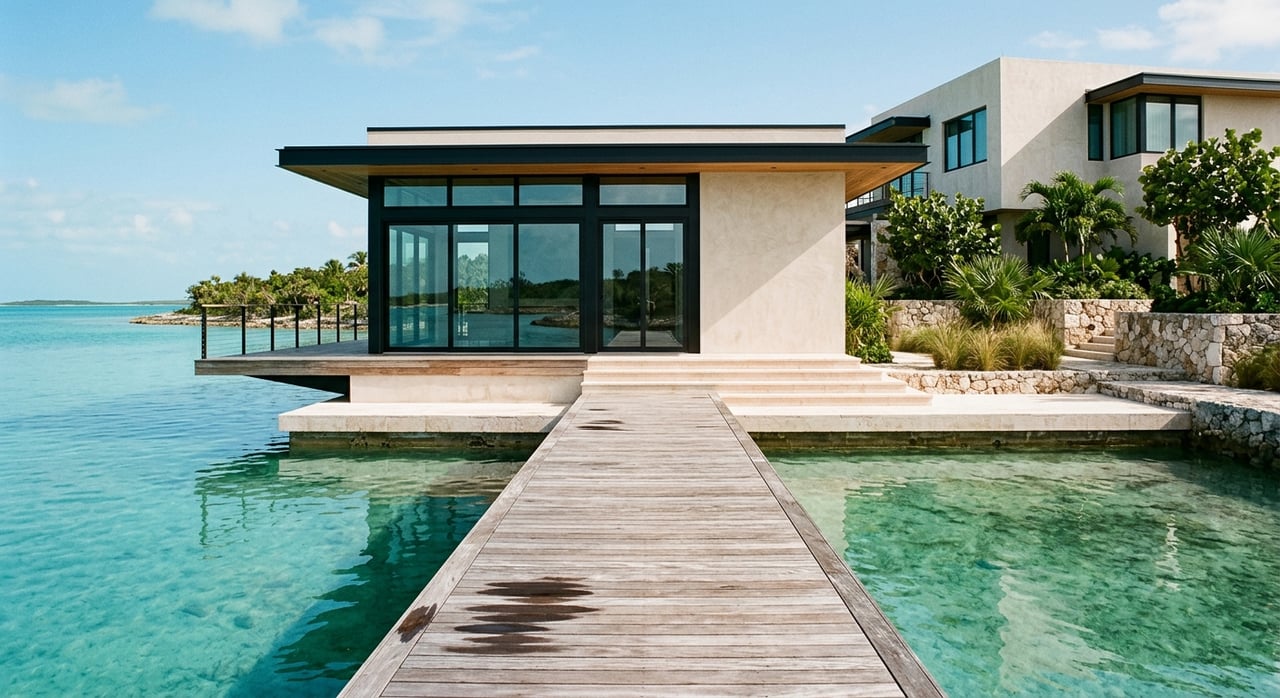
If you are considering a home in Albany, you are not just buying real estate. You are stepping into a resort community in New Providence where property ownership often connects with banking, legal planning, residency questions, and lifestyle access. For international buyers, that can feel exciting and complex at the same time. This guide walks you through how the purchase process generally works, what to verify early, and how to move forward with more confidence. Let’s dive in.
Why Albany purchases are different
Albany is a 600-acre oceanside resort community on New Providence with a 71-slip mega-yacht marina, championship golf, multiple residential product types, and an on-site Financial Center with private banks, legal firms, insurance firms, accounting firms, and trust companies, according to the Albany overview. That combination makes the buying process more layered than a standard residential purchase.
For many international buyers, the decision involves more than selecting a residence. You may also be thinking about ownership structure, financing, tax exposure, residency options, and how amenity access works after closing. Understanding those moving parts early can help you avoid delays later.
Who can buy in Albany
International buyers can purchase real estate in The Bahamas, including in Albany, but the rules depend on the type of property you buy. Under the International Persons Landholding rules, a non-Bahamian buying a condominium or a property to be used as a single-family dwelling generally needs to register the acquisition with the Investments Board rather than obtain a permit.
Other property categories can require a permit instead. That becomes especially important if you are buying undeveloped land or a broader landholding, since undeveloped land can become permit-sensitive if the purchase would leave you holding five or more contiguous acres, as outlined in the International Persons Landholding Act materials.
It is also important to know that the term non-Bahamian is broad. It can include foreign individuals, foreign companies, and Bahamian companies that are foreign-owned or foreign-controlled. In practice, that means buying through a local entity does not automatically change how the landholding is treated under the law.
Choose the right ownership structure
One of the first decisions is whether to hold title personally or through an entity. That choice may affect how your advisors coordinate banking, estate planning, tax records, and long-term ownership goals.
Because the law looks at foreign ownership and control, structure should be discussed carefully with Bahamian counsel before you go under contract. Albany itself notes in its terms and conditions that buyers should consult an attorney or other knowledgeable professional familiar with local real estate and development law.
In many Albany transactions, this step happens early because the property purchase may be part of a larger wealth or lifestyle plan. That is especially true when buyers are also exploring residency, marina use, or long-term family ownership.
Match the process to the property type
Not every Albany purchase follows the exact same path. The correct process depends on what you are buying.
Condos and single-family homes
If you are purchasing a condominium or a property that will be used as a single-family dwelling, registration with the Investments Board is typically the key requirement for a non-Bahamian buyer. That is often a more straightforward path than purchases involving different land categories.
Vacant land and larger holdings
If you are buying a vacant lot or a larger parcel, additional review may be needed to determine whether a permit is required. This is one reason experienced legal guidance matters early in the process.
The details matter because recording title without the required certificate or permit is void under the statute. In other words, the paperwork is not a minor formality. It is central to a valid closing.
Build your advisory team early
Cross-border purchases move more smoothly when your team is assembled at the start. In Albany, that often includes legal counsel and, depending on your plans, banking, insurance, accounting, or trust professionals.
Albany’s on-site Financial Center can be a practical advantage because it houses private banks, legal firms, insurance firms, accounting firms, and trust companies, according to the community overview. That does not replace independent advice, but it does reflect how integrated many Albany purchases can be.
If financing is part of the transaction, expect a lender to request a full financial file. For example, the research notes that Scotiabank Bahamas’ mortgage checklist includes proof of liabilities and the source of the down payment. Even cash buyers often benefit from organizing source-of-funds and entity documentation well in advance.
Understand closing costs and filing steps
Closing in New Providence includes a few procedural steps that international buyers should expect. Real property documents such as conveyances, mortgages, and long-term leases are submitted to the Department of Inland Revenue for VAT stamping.
According to the official VAT stamping procedures for real estate transactions, most of these transactions no longer attract stamp duty, and the VAT rates mirror the old bands:
- 2.5% under $100,000
- 10% at $100,000 and above
After vetting, the original documents are presented with payment to the Public Treasury. The title documents, along with the required registration certificate or permit, must then be recorded at the Registrar General’s Department. If the required approval documents are missing, the recording is void.
Plan for taxes after closing
Your costs do not end on closing day. Real property tax is an important part of ongoing ownership in New Providence.
Based on the Real Property Tax law, other property is taxed at 1% up to $500,000 and 2% above that level. For non-Bahamians, undeveloped property can become far more expensive to hold, rising to 7% of market value after two years if it remains undeveloped.
That makes property type especially important when you are comparing a completed residence with land intended for future construction. Taxes due in New Providence are paid to the Treasurer, so your legal and accounting advisors should help you build this into your ownership plan.
Consider residency options
Many buyers ask whether owning in Albany can support time spent in The Bahamas. The answer depends on the residency path you want to pursue.
Annual home owner resident card
A non-Bahamian who owns a home in The Bahamas may apply for an annual home owner resident card, provided ownership and admissibility criteria are met. The fee schedule in the statute lists the cost at $500, and the card covers the owner, spouse, and minor children for the duration of the card.
Economic permanent residence
For longer-term planning, The Bahamas amended the economic permanent residence rules effective January 1, 2025. The current threshold requires a $1 million investment held for at least 10 years in Bahamian real estate or Central Bank zero-coupon bonds, based on the same statutory materials.
Applications using real estate must include several supporting items, including:
- The conveyance
- Proof VAT was paid and the document was recorded
- The sales agreement
- The real property tax assessment number
- Proof real property tax was paid
- A licensed appraisal
The current fee schedule shows $25,000 for economic permanent residence with the right to work in your own business and $20,000 without that right. The 2024 regulations also note that a dormant application lapses after 90 days if the fee is not paid, though it may be reinstated for $500.
Know that ownership and access are separate
One of the most important Albany-specific details is that buying property does not automatically give you use of all recreational amenities. Albany’s terms and conditions state that ownership of a home site does not itself grant access to the golf course or other recreational facilities, because recreational use is subject to membership requirements.
This is a key due diligence point. If your purchase decision is tied to golf, tennis, marina access, or club lifestyle, you should clarify the separate membership and onboarding process as early as possible.
Albany’s guest policy also explains that guests must register and obtain a Guest Charge Card at concierge before using amenities such as golf or tennis. It also notes that non-dining amenity guests are limited to five visits per year, while guests staying with a homeowner are not subject to that same restriction.
A practical purchase sequence
For most international buyers, the process can be understood in a few clear steps:
- Select the property type and decide whether you will hold title personally or through an entity.
- Confirm the legal path by determining whether the property qualifies for registration only or requires a permit.
- Engage Bahamian counsel early to review title, prepare the conveyance, and coordinate any residency or ownership goals.
- Organize financing or source-of-funds records so your file is ready for bank and closing requirements.
- Complete VAT stamping and recording through the required New Providence procedures.
- Address post-closing needs such as real property tax setup, residency applications, and Albany membership or guest onboarding.
Taken together, these steps reflect why Albany transactions are often best handled with a coordinated, concierge-style approach. The process is manageable, but it rewards preparation.
If you are exploring Albany and want a more private, well-orchestrated buying experience, The Altidor Collection can help you navigate the purchase process with local market insight and discreet guidance.
FAQs
What legal approval does an international buyer need to purchase in Albany Bahamas?
- A non-Bahamian buying a condominium or a single-family dwelling generally must register the acquisition with the Investments Board, while other property categories may require a permit.
Can an international buyer use a company to buy Albany real estate?
- Yes, but a company that is foreign-owned or foreign-controlled can still be treated as non-Bahamian under the law, so entity use does not automatically change the landholding rules.
What taxes apply when buying property in New Providence?
- Real property documents are generally submitted for VAT stamping, with rates of 2.5% under $100,000 and 10% at $100,000 and above, based on the official New Providence procedures.
Does owning a home in Albany include golf and other amenities?
- Not automatically. Albany states that ownership and recreational access are separate, and amenity use is subject to membership requirements.
Can buying a home in The Bahamas help with residency?
- Yes. A qualifying homeowner may apply for an annual home owner resident card, and some buyers may also consider the economic permanent residence route if they meet the investment and document requirements.
What ongoing costs should an Albany buyer review after closing?
- Buyers should review real property tax obligations, and non-Bahamian owners of undeveloped property should pay close attention because that tax rate can rise significantly after two years if the land remains undeveloped.