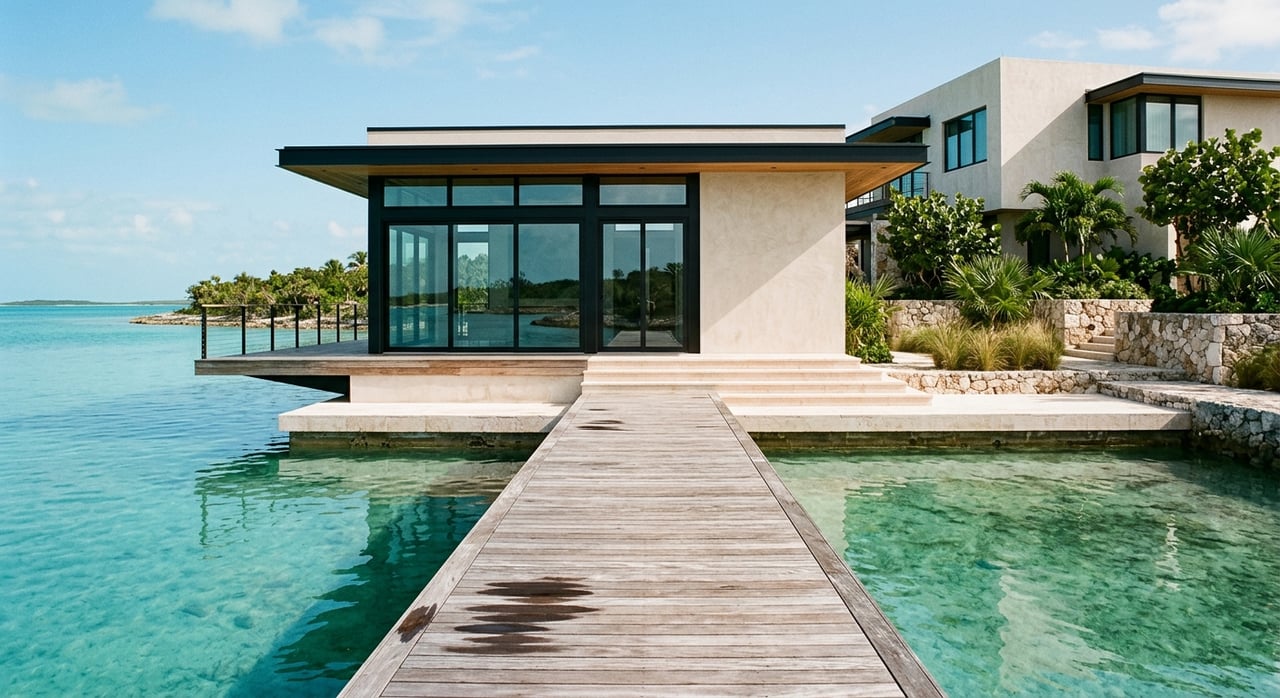
What does it really take to buy a private island in Exuma? For many buyers, the dream starts with turquoise water and total privacy, but the real decision comes down to access, infrastructure, legal requirements, and how you plan to use the property. If you are exploring private island opportunities in Exuma, this guide will help you understand what to compare, what to verify, and where the biggest differences often appear. Let’s dive in.
Why Exuma Draws Private Island Buyers
Exuma is not a single island market. It is a 365-island chain made up of Great Exuma, Little Exuma, and the Exuma Cays, with destinations that range from George Town on Great Exuma to low-density cay environments such as Staniel Cay, Compass Cay, and Highbourne Cay, according to official Exumas tourism information.
That geography is a big part of the appeal. In Exuma, private islands are not an unusual concept layered onto the landscape. They are part of the region’s identity, which makes the market especially compelling for buyers seeking privacy, legacy ownership, or a development play in one of The Bahamas’ most visually distinct settings.
The market also remains active. The Central Bank’s June 2025 update noted that Exuma had 927 available listings, while vacation-rental listings were up 10.9 percent year over year, reinforcing that this is a market with ongoing real estate activity rather than a purely theoretical niche.
What Private Island Opportunities Look Like
One of the most important things to understand is that “private island” can mean very different things in Exuma. Some opportunities are closer to turnkey ownership, while others are best viewed as long-term development projects.
Current public listings illustrate that range clearly:
- Norman’s Cay Residence is a 0.44-acre, 3-bedroom villa priced at $2.999 million, with a private well, generator, water filtration, security lighting, and proximity to the airstrip.
- Sanctuary & Mini Cay is a 5.71-acre two-cay package priced at $3 million and positioned as a blank canvas near Norman’s Cay and its airstrip and marina.
- Robert’s Cay is a 12-acre undeveloped island priced at $5.25 million, noted for beaches, elevation, and a protected harbour.
- Hog / Mingo Rolle Cay is a 470-acre development-oriented holding priced at $10 million.
- Leaf Cay is a 14-acre fully serviced private island priced at $15.9 million, with a large dock, underwater cable power from Staniel Cay, existing livable buildings, and approved plans for a full resort and marina.
These examples are representative, not exhaustive, and the MLS disclaimer notes that the database may not include every property listed in The Bahamas MLS. Still, they show the core point: price alone does not tell you how usable, accessible, or ready an island really is.
Start With Access First
Before you compare architecture, acreage, or beaches, start with logistics. In Exuma, access can shape everything from your acquisition strategy to your long-term operating costs.
According to The Bahamas tourism portal, Exuma International Airport on Great Exuma is the primary gateway, with daily domestic and international arrivals. The same source notes that Staniel Cay Airport is an official port of entry with Customs and Immigration, and many cays are reached by boat or air.
That difference matters. A cay near an airstrip or near a port-of-entry location may offer a very different ownership experience than a boat-only island. Easier access can affect how often you visit, how efficiently guests or contractors arrive, and how practical the property feels over time.
Access questions to ask
- Is the island reached by boat only, or by both boat and nearby air access?
- How close is the nearest airstrip or marina?
- Is there an existing dock or protected anchorage?
- If the property is development-oriented, would future access improvements be needed?
For many buyers, this is the first real filter. A spectacular cay that is difficult to reach may still be the right fit, but only if that level of remoteness aligns with your goals.
Infrastructure Can Change the Entire Deal
In Exuma, two islands at similar price points can carry very different infrastructure profiles. That is why private island acquisitions require a more detailed review than a typical luxury home purchase.
Some properties already show meaningful utility support. Leaf Cay’s listing notes power supplied by an underwater cable from Staniel Cay, a large dock, and existing livable buildings. Norman’s Cay Residence includes a private well, generator, water filtration, central air, and security lighting.
Other opportunities may require much more groundwork. Based on listing details, undeveloped holdings such as Robert’s Cay or Hog / Mingo Rolle Cay may require a buyer to create or significantly expand the core systems needed for comfortable use or future development.
Key infrastructure items to verify
- Power source, whether generator, underwater cable, or another setup
- Fresh water systems, such as wells or filtration
- Dockage and marine access
- Waste and servicing plans
- Internet and communications options
- Existing structures versus raw land
Official tourism and hospitality sources also show that some Exuma service nodes can support island living. Highbourne Cay is identified as a privately owned island with a first-class marina and luxury cottages, while Farmers Cay Yacht Club and Marina is described as offering dock slots, shore power, moorings, internet, laundry, ice, rooms, and food service. Compass Cay is also described as having a protected marina.
These nearby support points can be highly relevant, especially if you are evaluating a cay that is private but not fully self-contained.
Understand the Legal Framework Early
For international buyers, legal structure is not something to review at the end. It should shape your due diligence from the beginning.
Under the International Persons Landholding Act, non-Bahamians can buy land in The Bahamas, but the rules depend on the type of property and acreage involved. A non-Bahamian buying owner-occupied property generally registers the acquisition. However, if the property is undeveloped land and the acquisition would make the buyer the holder of two or more contiguous acres, a permit is required.
That threshold matters in Exuma because many private island opportunities involve undeveloped land over that size. The same statute states that an acquisition made without the required permit is null and void, which makes early legal review essential.
The Central Bank’s guidance on residential property transactions adds another layer. It states that non-residents still need the relevant permit or certificate of registration under the Act, and it distinguishes residential transactions from commercial real estate investments, which require exchange-control approval at the development stage.
Development Plans Need Their Own Timeline
If you are buying for more than personal use, approvals can become a major part of the investment story. A private island intended for a residence follows a different path than one planned for a marina, resort concept, or subdivision.
The Planning and Subdivision Act states that Site Plan Approval is required for development that is not exempt, and Subdivision Approval is required for subdividing land. The process involves public notice and hearings, and approvals can lapse if development does not substantially commence within one year.
In practical terms, that means buyers should map approvals before signing a term sheet, not after closing. For larger cays or development parcels, timing, entitlement risk, and intended use should all be part of your underwriting.
Environmental Context Matters in Exuma
Exuma’s natural beauty is a major part of its value, but it also comes with environmental context that buyers should understand clearly. This is especially important if the property is in or near protected marine areas.
The Exuma Cays Land and Sea National Park is a 176-square-mile no-take reserve. According to the Bahamas National Trust information referenced on the tourism site, no fishing, shelling, or conching is permitted within park boundaries, and permits are required for filming and research. The tourism site also notes that Exuma’s land-and-sea parks protect nearly 130,000 acres in total.
For buyers, this means environmental constraints are not a side issue. They can affect use, access, boating patterns, and future planning assumptions.
Budget Beyond the Purchase Price
A private island purchase is rarely just about the asking price. Closing costs, tax documentation, operational setup, and ongoing logistics all deserve attention.
The Central Bank’s transaction checklist includes evidence of stamp tax and or VAT on the recorded conveyance, which is a useful reminder that acquisition costs extend beyond the headline number. If you are buying undeveloped land, you may also need to account for infrastructure creation, marine access improvements, staffing plans, and professional approvals.
A simple way to frame island opportunities
| Opportunity type | What it may offer | What to watch closely |
|---|---|---|
| Turnkey island residence | Existing home, some utilities, faster personal use | Access limits, system capacity, service support |
| Lightly improved cay | Partial infrastructure, dockage, future upside | Cost to complete, permits, operational planning |
| Blank-slate island | Maximum flexibility and privacy | Entitlements, utilities, access, timeline, staffing |
| Development-scale holding | Large acreage and broader vision | Planning approvals, exchange-control process, execution complexity |
How to Evaluate Fit, Not Just Beauty
The right island is not always the largest one, the closest one, or the one with the best photos. It is the one whose access, infrastructure, and legal path support your intended use.
A buyer seeking immediate personal enjoyment may prioritize a livable residence with utilities and straightforward access. A buyer focused on long-term value creation may be more comfortable with undeveloped land, a longer approval timeline, and phased infrastructure planning.
That is where experienced local guidance matters most. In a market as nuanced as Exuma, the best opportunities are often defined less by headline acreage and more by how well the asset aligns with your vision, timeline, and tolerance for complexity.
If you are considering a private island purchase in Exuma, The Altidor Collection offers a discreet, relationship-first approach tailored to complex, high-value Bahamian acquisitions.
FAQs
What makes Exuma different for private island buyers?
- Exuma offers a broad spectrum of private island opportunities, from small turnkey residences to large undeveloped development parcels, with major differences in access, infrastructure, and approvals.
What should buyers check first when buying a private island in Exuma?
- Buyers should start with access, including whether the cay is boat-only, near an airstrip, or close to a port of entry such as Staniel Cay.
What legal rule matters most for non-Bahamian buyers in Exuma?
- Under the International Persons Landholding Act, non-Bahamians generally register owner-occupied purchases, but a permit is required for undeveloped land when the acquisition would make the buyer the holder of two or more contiguous acres.
What infrastructure questions matter most for Exuma private islands?
- Buyers should verify power, water, dockage, waste systems, communications, and whether the property has existing buildings or requires full infrastructure development.
What approvals may be needed for developing a private island in Exuma?
- Depending on the intended use, buyers may need Site Plan Approval, Subdivision Approval, and in some cases exchange-control approval for commercial real estate investment at the development stage.
What environmental rules should private island buyers know in Exuma?
- Buyers should understand whether a property is in or near protected areas such as the Exuma Cays Land and Sea National Park, where no-take rules and certain permit requirements apply.